Baunei: The Complete Guide to the Village of the Supramonte
Everything about Baunei: the historic centre, the Supramonte, the Golgo plateau, Su Sterru, the rural churches, where to eat and sleep. The definitive guide.
Baunei is the heart of Ogliastra's wildest territory. Perched at 480 metres above sea level, it presides over 40 kilometres of inaccessible coastline — the most unspoilt in the Mediterranean — and an interior of mountains, canyons and plateaus that has no equal in Europe. It is not a place for everyone: it is a place for those who seek the essence.
The Historic Centre
The village of Baunei unfolds along narrow, steep streets, with limestone and granite houses clinging to the mountainside. The centre is small — you can walk it in half an hour — but dense with character.
What to See
Church of San Nicola di Bari — The 16th-century parish church commands the village from its elevated position. Local limestone façade, a sober interior with a wooden altar.
The Murals — The walls of several houses in the centre are decorated with murals depicting the pastoral life of Baunei. Shepherds, flocks, the Supramonte: the village's history painted on its own walls.
The Belvedere — From the upper part of the village, your gaze sweeps from the cliffs of the Gulf of Orosei to the mountains of the Gennargentu. At sunset the limestone turns pink.
The Ethnographic Museum — A small but precious collection of objects from Baunei's pastoral civilisation: cheesemaking tools, wooden utensils, traditional costumes.
The Supramonte of Baunei
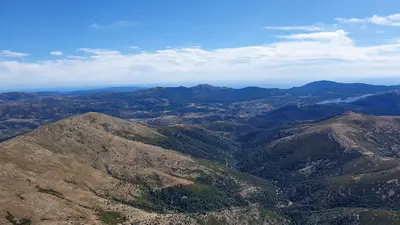
The Supramonte is a karst plateau extending over more than 100 km² between Baunei, Urzulei and Dorgali. It is one of the wildest environments in Europe: no roads, no dwellings, no mobile phone coverage. Only limestone, Mediterranean scrub, thousand-year-old holm oaks and silence.
The Golgo Plateau
Reachable by car from Baunei (20 minutes on a paved road), the Golgo is the gateway to the coastal Supramonte. At 400 metres above sea level, the plateau opens onto a lunar landscape of white limestone, low scrub and an endless sky.
Su Sterru — The deepest karst sinkhole in Europe: a vertical shaft 270 metres deep that opens suddenly in the flat terrain. Protected by a fence, it can be viewed free of charge. The effect is dizzying.
Church of San Pietro — A small rural chapel standing alone on the plateau, a destination for pilgrims. Beside it stands an ancient wild olive tree and a livestock watering trough. It is one of the most photographed spots in Ogliastra.
The shepherds' enclosures — Scattered across the plateau, the stone structures of the shepherds (cuiles) are still in use. Some have been converted into agriturismi serving memorable lunches.
The Baunei Coastline
The 40 km of coastline in the municipality of Baunei include some of the world's most beautiful beaches, all reachable only by sea or on foot:
- Cala Goloritzé — Natural Monument; the 148m limestone sea stack (Aguglia)
- Cala Mariolu — Dolomitic marble pebbles, unreal waters
- Cala Sisine — Beach fringed by a holm oak forest down to the water's edge
- Cala dei Gabbiani — Wild twin of Cala Mariolu
- Cala Biriala — Reachable only by swimming or kayak
- Cala Luna — On the border with Dorgali, the most famous cove in the Gulf
Santa Maria Navarrese
Baunei's marina — technically a hamlet — is a charming seaside village with a picturesque little harbour, a thousand-year-old wild olive tree and an Aragonese watchtower. It is the ideal base for boat trips to the coves of the Supramonte.
The Pastoral Culture
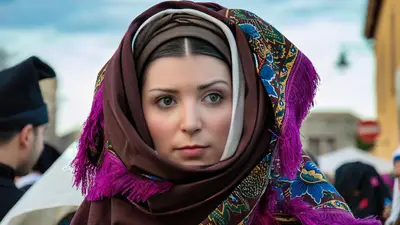
Baunei is a shepherd's village. For centuries, the lives of its inhabitants were shaped by transhumance: summers with the flocks on the Supramonte pastures, winters on the coastal plains. This culture has moulded the character of the place: pride, resilience, quiet hospitality.
The Cuisine
Baunei's cuisine is that of the shepherd: simple, hearty, rooted in the land.
- Su pistoccu — The shepherds' bread, thick and sturdy, it keeps for months
- Culurgiones — The Baunei version is larger and rounder than the classic Ogliastra variant
- Goat's cheese — Baunei's goats graze on the Supramonte scrubland, producing a cheese of intense, aromatic flavour
- Su porcheddu — Roast suckling pig cooked a carraxiu (in a pit with myrtle and branches)
- Pane frattau — Carasau bread softened in broth, with a poached egg and tomato sauce
Where to Eat
Restaurants in Baunei Restaurants in the village are few but authentic. Home-style cooking, generous portions, honest prices (€15–25 for a full meal). Do not expect menus in English or elaborate wine lists — here you eat what is on offer, and it is always good.
Agriturismi at the Golgo The agriturismi on the Golgo plateau are an unmissable experience. Fixed menu based on the farm's own produce: cold cuts and cheese starter, first course of culurgiones or malloreddus, main course of suckling pig or kid, dessert (seadas or pardulas), coffee and myrtle liqueur. All for €25–35 per person. Booking is essential.
Where to Stay
- B&Bs in the historic centre: €40–70/night. Family welcome, breakfast with local produce
- Agriturismi at the Golgo: €50–80/night. Perfect for those who want to live the Supramonte
- Hotels and residences at Santa Maria Navarrese: €60–120/night. More amenities, close to the sea
Getting There
Baunei is reached via the SS 125 (Orientale Sarda). From Tortolì/Arbatax: 25 minutes. From Cagliari: 2h30. From Olbia: 2h45. The village is served by ARST buses but with limited frequency — a car is essential.
Blue Zone
Baunei is one of the municipalities of the Sardinian Blue Zone. The isolation, the shepherds' active lifestyle, the Mediterranean diet and strong community bonds have produced exceptional longevity rates. Even today, walking through the village, you will encounter men and women in their eighties and beyond taking their goats out to pasture every morning.
When to Visit
- May–June: The ideal period. Trails are walkable, beaches uncrowded, temperature perfect
- July–August: Very busy (especially the beaches). Book everything well in advance
- September–October: Excellent. The sea is still warm, golden light, fewer tourists
- Winter: The village is very quiet. The trails are walkable, but the days are short