The Secret of Centenarians: Why People Live Longer in Ogliastra
Why do people live so long in Ogliastra? Discover the secrets of Sardinian longevity in the famous Blue Zone, from science to daily lifestyle and diet.
Ogliastra is famous worldwide for an extraordinary record: it is one of the planet's very few "Blue Zones"—geographical areas with an unusually high concentration of centenarians and supercentenarians. But what is the true secret of Sardinian longevity? And why do people live so long in Ogliastra?
Rather than a magic potion, it is an exceptional convergence of genetic factors, clean diet, an active lifestyle, and deep-rooted community bonds that define this beautiful region in eastern Sardinia.
The Discovery of the Sardinian Blue Zone: Scientific Studies
The term "Blue Zone" was actually coined in these mountains. In the early 2000s, Sardinian physician and demographer Gianni Pes and Belgian scientist Michel Poulain were mapping mortality rates in Sardinia. By drawing concentric circles with a blue marker on the areas of highest longevity, they noticed the core was centered in the small mountain villages of Ogliastra.
Their research revealed that, unlike other parts of the world where women usually live significantly longer, in the Sardinian Blue Zone, male and female centenarians reach the age of one hundred in an almost equal ratio (1:1). This unique demographic trait immediately drew the attention of geneticists and gerontologists from all over the world.
The 5 Villages of Male Longevity
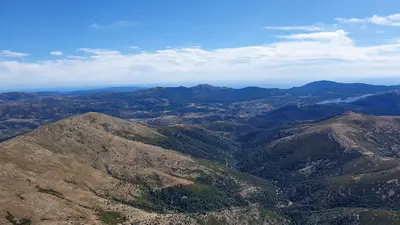
This longevity is not evenly distributed across the island but is concentrated in specific villages of the Ogliastra hinterland, where altitude and the rugged terrain play a key role.
| Village | Altitude | Key Characteristics | Longevity Record |
|---|---|---|---|
| Villagrande Strisaili | 700 m | Oak forests, mountain climate, pastures | Absolute world record for male longevity |
| Perdasdefogu | 599 m | Isolated territory, cohesive community | Guinness World Record for the longest-living family (Melis) |
| Arzana | 680 m | Slopes of Gennargentu, pure springs | Exceptionally high density of centenarian shepherds |
| Talana | 690 m | Perched village, pristine mountain air | Preservation of ancestral DNA and archaic dialect |
| Urzulei | 520 m | Wild Supramonte, geographic isolation | Long tradition of daily physical movement on steep slopes |
The Active Lifestyle: The Shepherd's Walk
One of the key physical factors behind Ogliastran longevity is natural and constant exercise. For generations, the primary economic activity of these mountains was semi-wild pastoralism. Shepherds in Ogliastra walked several kilometers daily over steep, rocky terrain to tend to their goats.
This moderate, continuous physical activity—free from the stresses of modern workouts—provided them with outstanding cardiovascular health. Walking uphill through the narrow streets of mountain villages or along the hiking trails of Gennargentu keeps the body active even in late life. It is common to see ninety-year-olds tending their vegetable gardens ("su cortile") or chopping wood for the winter.
The Centenarians' Diet: Simple, Zero-Kilometer Food
The diet of Sardinian centenarians is simple, wholesome, and closely tied to the land. It is not low in fats or carbohydrates, but rather centered on unrefined and fresh ingredients:
- Traditional bread: Pane pistoccu and pane carasau, made from durum wheat and containing a low glycemic index, often leavened with wild sourdough.
- Goat dairy: Goat milk and cheeses like casu axedu, rich in short-chain fatty acids and natural probiotics.
- Garden vegetables: Hearty minestrone soups rich in legumes (fave beans, chickpeas, and beans) and freshly harvested seasonal vegetables.
- Cannonau wine: Rich in polyphenols and antioxidants, consumed in moderation (one or two glasses a day), always during meals and in good company.
The Value of Family and Community
Beyond genetics and nutrition, social and psychological aspects play a vital role. In Ogliastran culture, the elderly are never isolated or viewed as a burden. Instead, they are celebrated as the guardians of historical memory, deeply integrated into family and community life.
Active aging is supported by the social structure of these villages: seniors gather daily in the main squares to chat, play cards, or share a glass of Cannonau. This strong sense of belonging reduces stress levels and combats loneliness, which is one of the main risk factors for cardiovascular and cognitive decline.